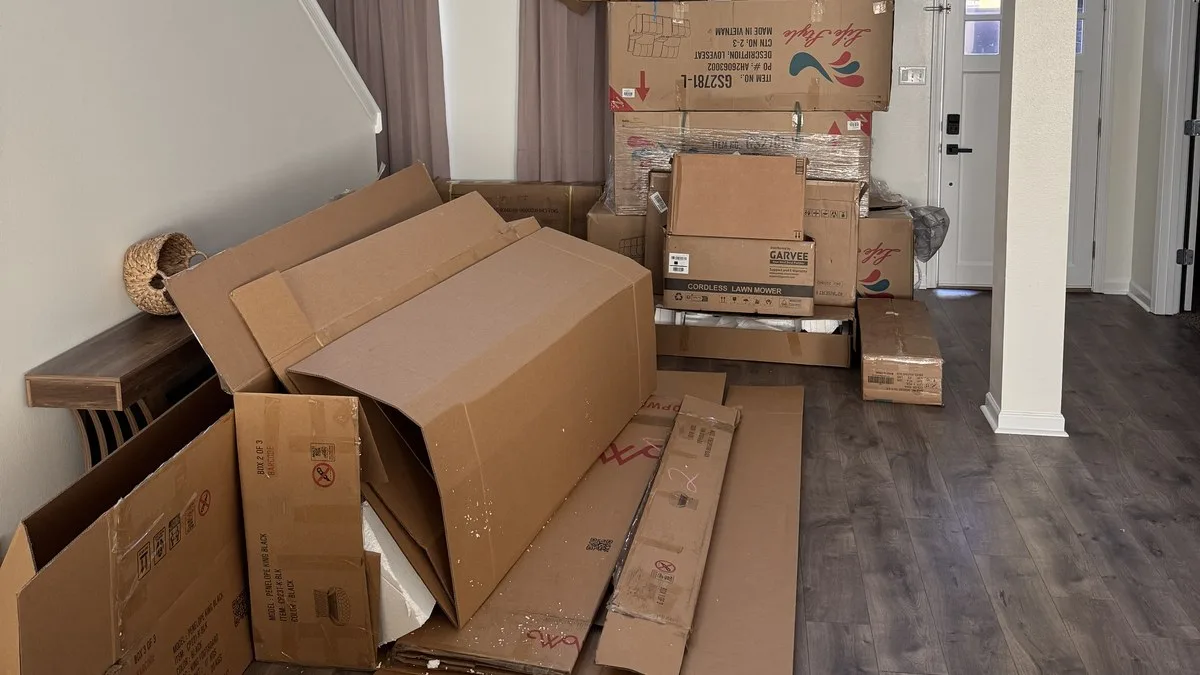
Clearing a Rental Before the Walkthrough: What to Handle First
Clear the large items first. Furniture, mattresses, and appliances are what a landlord photographs and bills you for, and under Louisiana Revised Statute 9:3251 a lessor may retain deposit money reasonably necessary to remedy a tenant default. Then do a room-by-room sweep, then photograph the empty unit before you hand over the keys.
- Louisiana law gives the lessor one month after the lease terminates to return the deposit, and requires an itemized written statement if any part is kept.
- The statute covers “unreasonable wear.” Belongings you left behind are not wear at all. They read as a default.
- Big items first: sofas, mattresses, appliances, anything a two-person crew cannot carry out.
- The protection that actually works is photographs of the empty unit, timestamped, every room.
- Ask any hauler what they cannot take before the truck shows up.
What is the walkthrough actually checking?
The walkthrough is a comparison, not an inspection. The landlord or property manager is holding a move-in condition report and looking for the difference between then and now. Louisiana Revised Statute 9:3251 lets a lessor retain what is “reasonably necessary to remedy a default of the tenant or to remedy unreasonable wear to the premises.” Everything in the unit gets sorted into one of those two buckets, or neither.
Scuffed baseboards and a worn carpet path in the hallway are arguments about wear. Those are gray. A dresser still standing in the second bedroom is not gray. It is something you agreed to remove and did not.
That distinction matters more than most tenants realize. You can spend a whole weekend arguing about paint and lose the deposit over a couch.
The property manager doing your walkthrough is usually not the person who decides what gets withheld. They document. Someone else prices it. That means whatever is visible in their photos becomes the entire record of your tenancy, and you will not be in the room when it gets read.
What does Louisiana law actually say about the deposit?
Louisiana Revised Statute 9:3251 sets three things out plainly. The lessor must return the deposit within one month after the lease terminates. If any portion is retained, the lessor must forward an itemized statement accounting for the proceeds retained and the reasons for it. And the lessor may keep only what is reasonably necessary to remedy a tenant default or unreasonable wear.
Read the statute yourself. It is short. We are a junk removal crew, not attorneys, and if there is real money at stake or the situation is complicated you should talk to someone who practices law in Louisiana.
The one-month clock and the itemized statement
One month runs from lease termination, not from the day you moved your last box. If the lessor keeps part of the deposit, the itemized statement is not optional under the statute. A vague deduction with no breakdown is not what the law describes.
Keep the envelope. Keep the email. Note the date it arrived.
The abandonment exception is the part people miss
The statute says the section does not apply when the tenant abandons the premises, either without giving the notice required by the lease or before the lease terminates. That is a real carve-out. Walking away early, or walking away quietly, can change which rules are in play.
So give notice the way your lease says to give it. In writing, on time, and keep a copy.
Leaving furniture behind and stopping communication is the exact pattern that looks like abandonment. Even if you paid rent through the final month, an apartment full of your belongings and an unanswered phone tells a story you did not intend to tell. Clear the unit, then close the loop in writing.
What should you clear first?
Start with anything a landlord would photograph. Sofas, mattresses, box springs, dressers, desks, appliances you brought in, and the garage or patio pile. These are the items that create a hauling charge on an itemized statement, and under the statute a charge for removing them is a default question, not a wear question.
Work in this order. It is how our crew sequences a turnover and it keeps you from running out of daylight on the wrong task.
- Oversized furniture. Anything requiring two people or a doorway strategy. Mattresses first, because they are bulky and nobody wants them at the last minute.
- Appliances you installed. Washer, dryer, window units, mini fridge. Confirm what conveys with the unit before you disconnect anything.
- The overflow zones. Garage, shed, patio, balcony, the space under the carport. These get forgotten because they are outside the rooms you lived in.
- Closets and storage. Top shelves, the hall closet, the space behind the water heater.
- Small debris and trash. Last, because it is fast and it is what a broom finishes.
The reason large-to-small works is capacity. See also: the same four-pile sort a garage cleanout uses. If a load fills up, you want it filled with the things that would have cost the most to leave.
How do you sweep room by room?
Go through each room twice, once at eye level and once low. The second pass is where the missed items live. This is the stage where an EPA figure is worth keeping in mind: 80.1% of discarded furniture and furnishings ends up landfilled (US EPA, 2018, the most recent year published). A usable couch has options if you decide early.
The spots that get missed
- Above kitchen cabinets and inside the oven drawer
- Behind and under the washer and dryer
- Medicine cabinets and under both bathroom sinks
- Attic access, especially in older Lake Charles rentals
- Curtain rods, wall anchors, and mounting hardware
- The mailbox, and any key you never returned
Open every door in the unit before you decide you are done. Every single one.
What can a hauler not take?
Ask before the truck arrives. Every hauling company works under different permits and disposal arrangements, so the answer varies by company and by parish. Do not assume, and do not find out at the curb with two hours left on your lease.
Questions worth asking any hauler you call:
- What do you not accept, and what should I do with those items instead?
- How do you handle paint, chemicals, or automotive fluids?
- What about tires, propane tanks, or batteries?
- Do you need parking or elevator access arranged in advance?
- How do you price a job, and what changes the price?
A straight answer to those questions tells you a lot about who you are hiring.
How do you document an empty unit?
Photograph everything after the last item leaves and before you return the keys. This is the single most useful thing in this post. If a lessor later retains deposit money and sends an itemized statement, as Louisiana Revised Statute 9:3251 requires, your photos are the only record you will have that contradicts or confirms it.
Do it this way:
- Every room, wide shot from the doorway, all four walls.
- Floors, corners, and closets with the doors open.
- Inside the oven, fridge, and cabinets.
- Garage, patio, and any exterior storage.
- Meter readings and the thermostat if utilities are yours.
Leave the timestamps on. Email the photos to yourself the same day so there is a dated record outside your phone. If the walkthrough happens with you present, ask for a copy of the condition report before you leave, and put your request in writing if they say it comes later.
What Tenants and Landlords Ask About Rental Cleanouts in Louisiana
These cover the deposit deadline, what counts as normal wear and tear, and when to clear the place relative to the walkthrough.
How long does a Louisiana landlord have to return a deposit?
Louisiana Revised Statute 9:3251 says the deposit must be returned within one month after the lease terminates. If any portion is retained, the lessor must forward an itemized statement accounting for what was kept and why. Read the statute directly for the full text, and get legal advice if your situation is contested.
Is leaving furniture behind considered normal wear and tear?
No. The statute addresses “unreasonable wear to the premises,” which describes the condition of the property itself. Belongings left in a unit are not wear. They fall under remedying a tenant default, which is a separate basis for retention in the same section of the law.
Should I clear the rental before or after the walkthrough?
Before. The walkthrough is where condition gets documented, and anything still sitting in the unit becomes part of that record. Clearing afterward means the photographs already show a full apartment. Schedule your haul with a buffer day in case something takes longer than expected.
What if I am the landlord doing the turnover?
Same order of operations, different motive. Clear the large items first so the unit can be photographed, assessed, and priced for repairs. Document condition before and after the haul. If you are retaining any deposit, the itemized statement described in the statute is what the law asks of you.
The last hour
Turnovers go wrong at the end, not the beginning. Someone underestimates the garage, or the mattress does not fit through the stairwell, or the truck is full. Build in a spare day. Handle the big items early and the last hour becomes a walkthrough and a handshake instead of a scramble.
Klutter Krewe is veteran-owned and serves Southwest Louisiana, from a single item through a full property cleanout. From Klutter to Clean.
Got a Deadline on a Rental?
Send a few photos of what needs to go and we will talk through it with you.