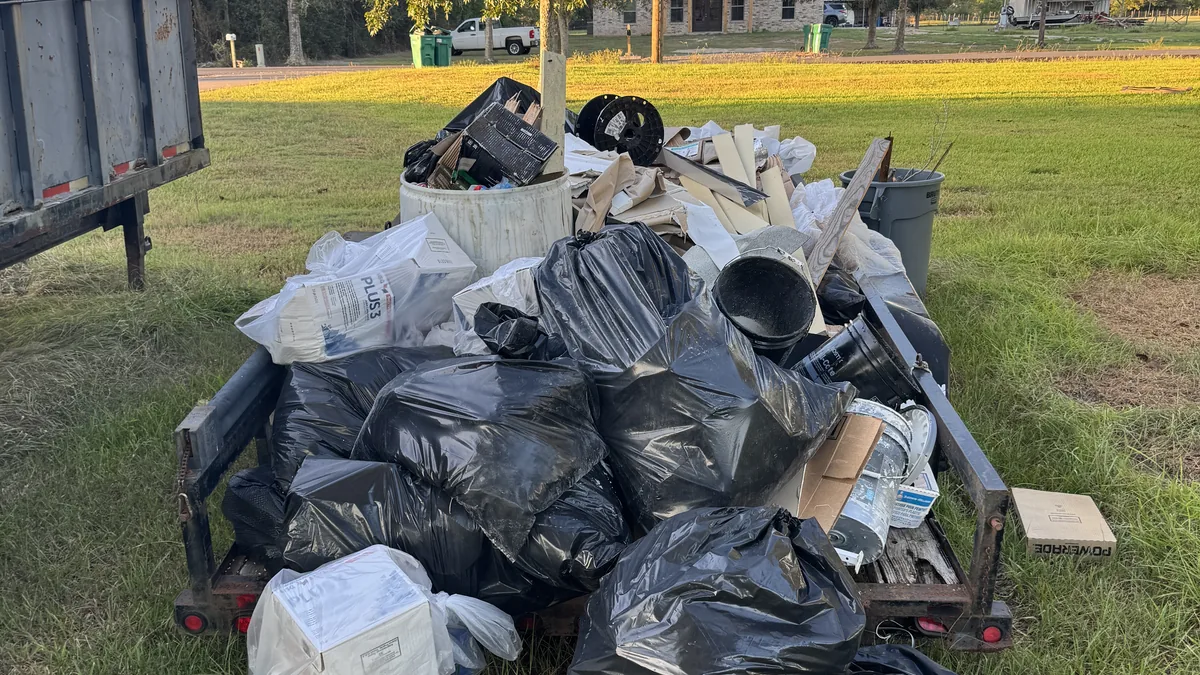
Construction Debris Removal in Southwest Louisiana: What to Plan Before the Crew
Plan three things before the crew shows up: what is in the pile, where it sits, and when it needs to be gone. The City of Lake Charles does not collect remodel debris at the curb, so it has to be hauled privately. Klutter Krewe hauls construction and demolition debris across Southwest Louisiana. Suspected asbestos goes to an abatement contractor first, and paint carries an added charge.
- Drywall, lumber, flooring, cabinets, fixtures and doors are typical construction debris.
- Lake Charles city pickup leaves building materials behind. The owner has to have them removed privately.
- Old flooring, shingles and textured walls can contain asbestos. Get them checked before anyone tears them out.
- Pull paint, fuel and chemicals out of the pile and set them to the side.
- Keep the debris in one pile the crew can reach. Debris set outside and ready to load may qualify for discounted curbside pickup.
- Pickup starts at $125. Construction debris can carry added disposal costs, so send photos first.
A remodel makes debris twice. There is the tear-out before the new work goes in, and there is the leftover mess once the work is done. Both stall a project if they sit in the driveway for two weeks.
In Lake Charles, the regular trash truck is not the answer. The City of Lake Charles garbage pickup rules say roofing, concrete, plaster, wallpaper and other material from construction repairs or remodeling will not be picked up, and the owner must have it privately removed. This guide covers what to sort, where to stage it, and when to book the haul.
What counts as construction debris?
Construction debris is the material that comes off a building when you repair, remodel or tear part of it down. On a typical Southwest Louisiana home project, the pile looks something like this.
- Drywall and plaster: torn-out sheets, ceiling patches and broken pieces.
- Lumber and trim: framing offcuts, old studs, baseboards, door casings and decking boards.
- Flooring: carpet and pad, laminate, tile and old vinyl.
- Cabinets and fixtures: kitchen and bathroom cabinets, countertops, vanities, sinks and doors.
- Roofing and masonry: shingles, broken concrete and brick from a repair or a small tear-out.
- Packaging: the boxes, buckets and wrap the new materials came in.
Louisiana treats this material as its own category. The LDEQ’s 2023 Biennial Solid Waste Capacity Report describes construction and demolition debris as relatively inert and non-putrescible, and it goes to permitted Type III landfills built for that waste. That is part of why a remodel pile does not ride along with household trash.
Klutter Krewe hauls construction and demolition debris, before the work starts and after it wraps up. Our construction debris removal service page covers how a construction haul runs. Heavy material like concrete can add to the disposal cost, so send a photo before the truck comes.
What has to come out of the pile before pickup?
Most of a remodel pile is ordinary debris. A few materials need a different route or a heads-up, and the time to find them is before demolition, not on loading day.
Anything that might contain asbestos
Asbestos was used in building products for decades. The EPA’s guide to where asbestos may be found lists vinyl floor tiles and the backing on vinyl sheet flooring, roofing and siding shingles, and textured paint and patching compounds on walls and ceilings. Those are exactly the materials a kitchen or bath remodel tears out.
You usually cannot tell by looking. The EPA’s advice for homeowners on asbestos says that if in doubt, treat the material as if it contains asbestos and leave it alone. It suggests having a trained and accredited asbestos professional inspect the home before you remodel.
In Louisiana, the LDEQ Asbestos Program notes that renovation and demolition requirements apply whenever work may disturb asbestos. Asbestos goes to an abatement contractor. Once that work is done, we can clear the rest of the job.
If you suspect asbestos in the flooring, siding or ceiling texture, stop before anything is pulled up or broken. Do not sweep, sand or scrape it yourself. Get it tested first.
Painted surfaces in an older house
Lead paint is a planning question for whoever does the tear-out. The EPA’s Renovation, Repair and Painting Program requires anyone paid to disturb painted surfaces in homes built before 1978 to be certified in lead-safe work practices.
It generally does not apply to homeowners working on their own homes, unless you rent out all or part of the home, run a childcare center in it, or buy, renovate and sell homes for profit. If your house predates 1978, ask your contractor about lead-safe practices before demolition starts.
Paint, fuel and chemicals
Leftover paint is common at the end of a remodel. We take paint for an added charge, since the cans have to be filled with absorbent material first. Fuel cans, solvents and other chemicals should be pulled out of the pile and set to the side. Our guide to what junk removal will and will not take in Lake Charles covers the rest of that list.
Pressure-treated lumber
Old deck boards and fence posts are often treated wood. The EPA’s guidance on chromated arsenicals (CCA) says treated wood can usually go out as ordinary trash, but it should not be reused as mulch or burned in a residential setting. Do not put it in the burn pile.
Where should the debris pile go?
Staging decides how fast loading goes. A pile the crew can walk straight up to loads quicker than debris spread across three rooms and a back porch.
- Keep it in one spot. A single pile near the driveway is easier to price from a photo and quicker to load.
- Leave a clear path. Move vehicles and materials you are keeping so the truck and trailer can get close.
- Separate the set-asides. Paint, fuel cans and anything you suspect contains asbestos stay out of the main pile.
- Watch the nails. Stack boards with exposed nails together, points down, so nobody steps on them.
- Say what is upstairs. Stairs may require additional labor, and multiple flights can add a labor charge. Mention it when you ask for a quote.
If the debris is still inside, say so when you ask for a quote. When it is already placed outside and ready to load before we arrive, discounted curbside pickup may be available.
When should you book the haul?
Timing matters more on a construction job than on an ordinary cleanout. Debris that sits in the way slows the next step of the project.
Most remodels have two natural haul points. The first is right after tear-out, so the space is clear before new work goes in. The second is at the finish, when the leftover scraps and packaging come out. Klutter Krewe handles both pre-construction and post-construction debris, so tell us which end you need, or both, when you ask for a quote.
Photos make the quote faster. Three or four wide shots of the pile, plus close-ups of anything heavy or unusual, answer most questions up front. We get back to every quote request the same business day at the latest.
Send photos of the tear-out and tell us when the space needs to be clear. You can request a free quote with photos or reach us directly.
Junk haul or roll-off dumpster?
Both get construction debris off the property. They suit different projects, and the right one depends on how long the work runs and who is doing the lifting.
| What matters | Roll-off dumpster | Junk haul crew |
|---|---|---|
| Who loads it | You or your contractor | The crew does |
| How long it stays | Sits on the property for the rental period | Hauled away when the crew loads it |
| Where it sits | Needs a driveway or pad with room for the container | No container parked on the property |
| What can go in | Set by the rental company’s rules | Confirmed from your photos before pickup |
| Best fit | Long projects that make debris every day | A finished tear-out or a pile that is ready to go |
A long gut renovation that fills a container a little at a time can suit a dumpster. A pile that already exists, or a job where nobody wants to do the lifting, usually suits a haul.
Where does construction debris end up in Southwest Louisiana?
Most of it goes to a Type III landfill permitted for construction and demolition debris. That capacity is tighter here than anywhere else in the state.
The LDEQ’s capacity report, published in December 2024, estimates the Southwest Region’s C&D landfills have about 14 years of remaining capacity, the shortest of the state’s six regions. The same report shows how storms swing that number: the region generated 1,642,601 wet tons of C&D debris in fiscal year 2021, after Hurricanes Laura and Delta, against a non-storm average of 257,609 wet tons a year.
Storm cleanup is its own topic with its own rules. This guide is about planned repairs and remodels. On those jobs, anything that can be recycled gets recycled, and usable items can be donated within a reasonable distance if you ask. We do not promise that every piece stays out of the landfill, because nobody honestly can.
What Southwest Louisiana Homeowners Ask About Construction Debris
These are the questions that come up most once a remodel is on the calendar. If yours is not here, our junk removal FAQs cover more, or call and ask.
Will the City of Lake Charles pick up remodel debris at the curb?
No. The city’s garbage rules list roofing, concrete, plaster, wallpaper and other material from construction repairs or remodeling on private property as items it will not pick up. The owner has to have that waste privately removed. Regular household trash and bulky household items follow separate city pickup rules.
Can I take construction debris to the Calcasieu Parish drop-off centers?
The two parish convenience centers take residential waste that fits their containers, including painted or treated wood, according to Pick It Up Calcasieu. Commercial and industrial waste is prohibited, and asbestos siding is not accepted. A large tear-out or a contractor’s load is usually a better fit for a hauler.
Do you haul debris before and after a remodel?
Yes. Klutter Krewe handles pre-construction debris from the tear-out and post-construction cleanup once the work is finished. Tell us which end of the project you need, or both, when you ask for a quote. Photos of the pile and a rough timeline help us plan the haul around the work.
How much does construction debris removal cost?
Pickup service starts at $125. The final price depends on volume, material type, labor and disposal requirements, and construction debris can carry additional disposal costs. Estimates are free. Our pricing for junk and debris pickup explains how a quote comes together, and photos make the number more accurate.
What if I think the old flooring contains asbestos?
Leave it alone and get it tested. The EPA says you usually cannot tell asbestos by looking, and suggests an accredited professional inspect the home before a remodel. Do not sweep, sand or scrape it yourself. Asbestos goes to an abatement contractor. Once that work is done, we can clear the rest of the debris.
Can pressure-treated lumber go out with the rest of the debris?
Most of the time, yes. The EPA says treated wood can generally be thrown away as ordinary trash, though local rules can differ. It should never be burned at home or reused as mulch. The Calcasieu Parish convenience centers list painted or treated wood among the items they accept.
Before the first wall comes down
Walk the project once with this list. Check the age of the house, flag anything that might hold asbestos, pick the spot for the pile, and decide when each haul should happen. Ten minutes of planning keeps the debris from becoming the thing that stalls the job.
Klutter Krewe is veteran-owned and based in Calcasieu Parish, serving Lake Charles, Sulphur, Westlake, Moss Bluff, Iowa, DeQuincy, Vinton and the rest of our Southwest Louisiana service area. See how a Klutter Krewe pickup works from first photo to clean site. From Klutter to Clean.
Got a remodel pile to clear?
Send a few photos of the debris and tell us when the space needs to be clear. We will get back to you with a real number the same business day.